Personal Finance
The 15-Minute Weekly Money Review: 5 Numbers Worth Checking
A weekly money review is a 15-minute check of five numbers — income, spending, budget variance, savings, and upcoming obligations — so small drifts don’t become month-end surprises.
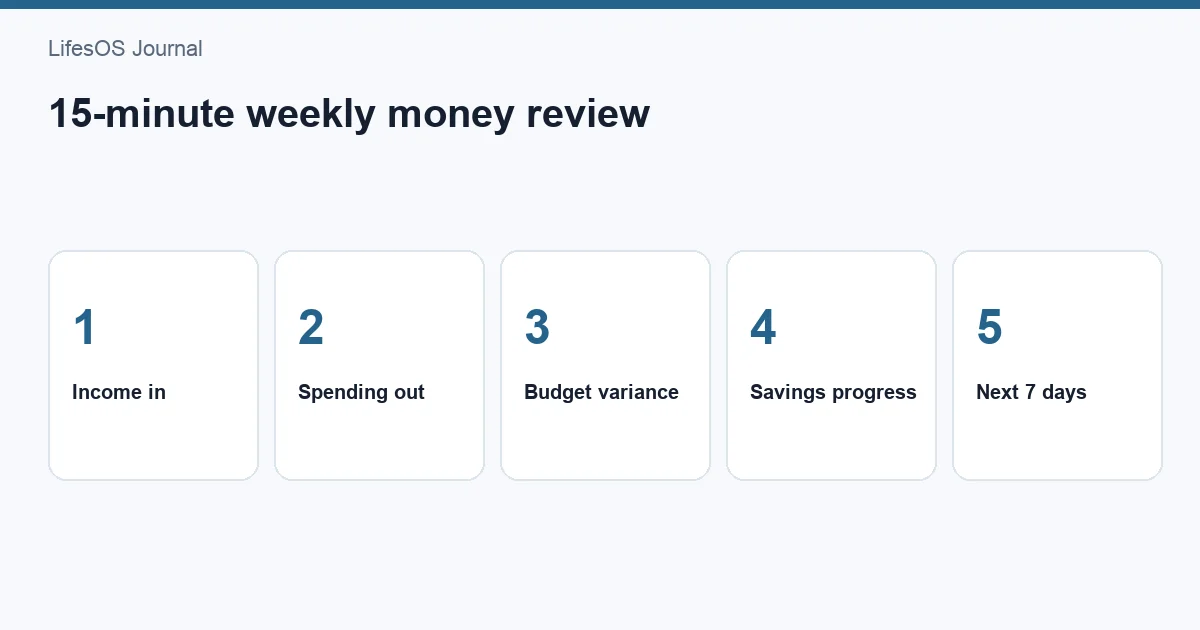
A weekly money review is a short ritual to check a handful of money signals and adjust the next seven days. Fifteen minutes is enough when your categories are already set up.
- Five numbers beat twenty dashboards.
- Variance early is cheaper to fix than variance on day 28.
- Pair with a broader weekly life review.
The five numbers
- Income in — expected deposits that actually arrived
- Spending out — total spend since last review
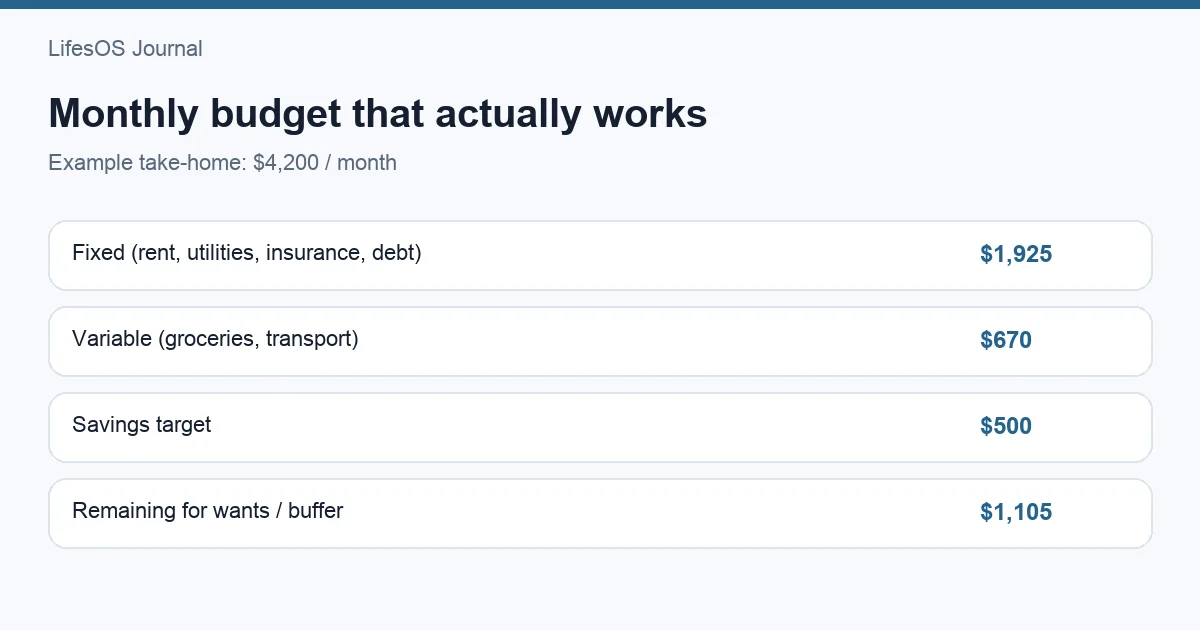
- Budget variance — categories over/under plan (see your monthly budget)
- Savings progress — contributions vs target / savings rate
- Next 7 days — rent, tuition, travel, known large pulls
Minute-by-minute script
| Time | Action |
|---|---|
| 0–3 | Capture missing transactions |
| 3–8 | Scan category totals vs budget |
| 8–12 | Note one fix (cap a category, move money, delay a want) |
| 12–15 | List known bills in the next week |
In LifesOS
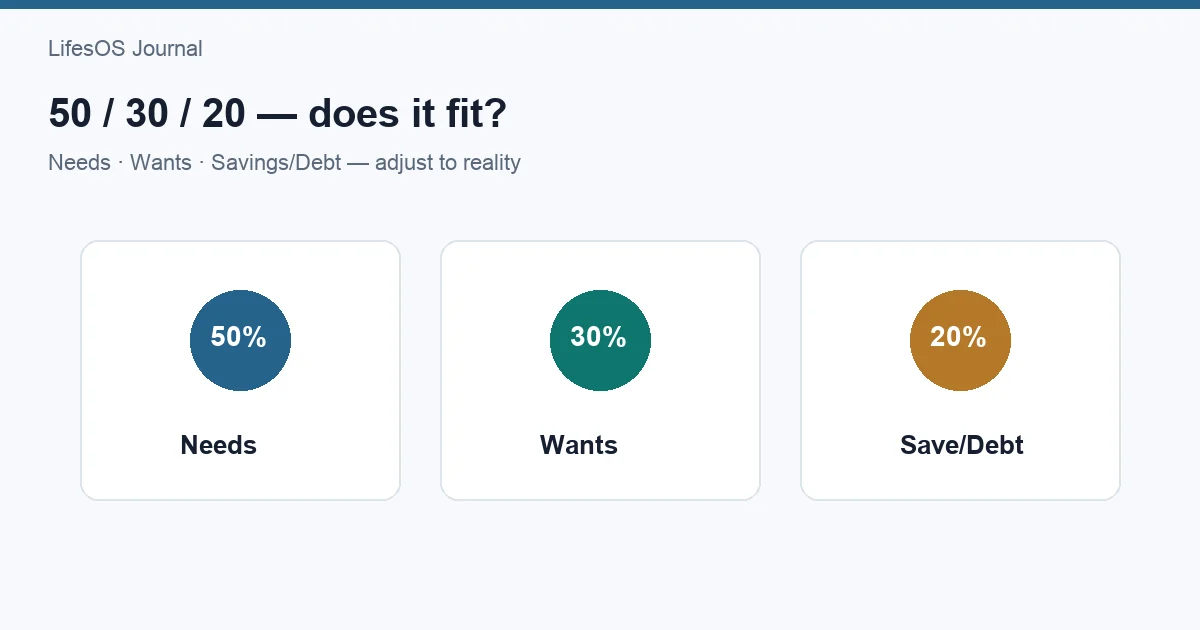
Use Finance for categories and Weekly Report for the weekly snapshot. Log quickly with AI-assisted input. Related: expense tracking, 50/30/20, Six Jars.
Budget variance in one sentence
Budget variance is the difference between planned category spending and actual spending for a period. A grocery plan of $450 with $520 actual is $70 over — information, not a verdict.
The “next 7 days” check prevents false confidence
A category can look fine on Friday and break on Monday when rent hits. Always scan known obligations in the coming week before celebrating green totals.
End with one fix
Reviews fail when they produce guilt without a change. Choose one adjustment: freeze dining for five days, move $50 from wants to groceries, or schedule a bill payment. Small fixes compound.
Related: Zoom out with a monthly financial review.
FAQ
What if I miss a week?
Do a 20-minute catch-up, then resume. Missing once is data; quitting is the expensive outcome.
Educational general information only — not personalized financial advice. Adjust frameworks to your situation. LifesOS tools are informational, not advice.