Personal Finance
What Is a Savings Rate and How Do You Calculate It?
Your savings rate is the percentage of income you save rather than spend in a period. Formula: (Income − Expenses) ÷ Income × 100 — or Savings ÷ Income × 100.
A savings rate measures the percentage of income saved rather than spent during a defined period. Common formula: (Income − Expenses) ÷ Income × 100, which equals Amount saved ÷ Income × 100 when “saved” means income not spent.
- Be consistent: use net income or gross — don’t mix mid-year.
- There is no universal “correct” rate; goals, income, and obligations differ.
- Track the trend monthly or quarterly more than a single hero month.
Formula
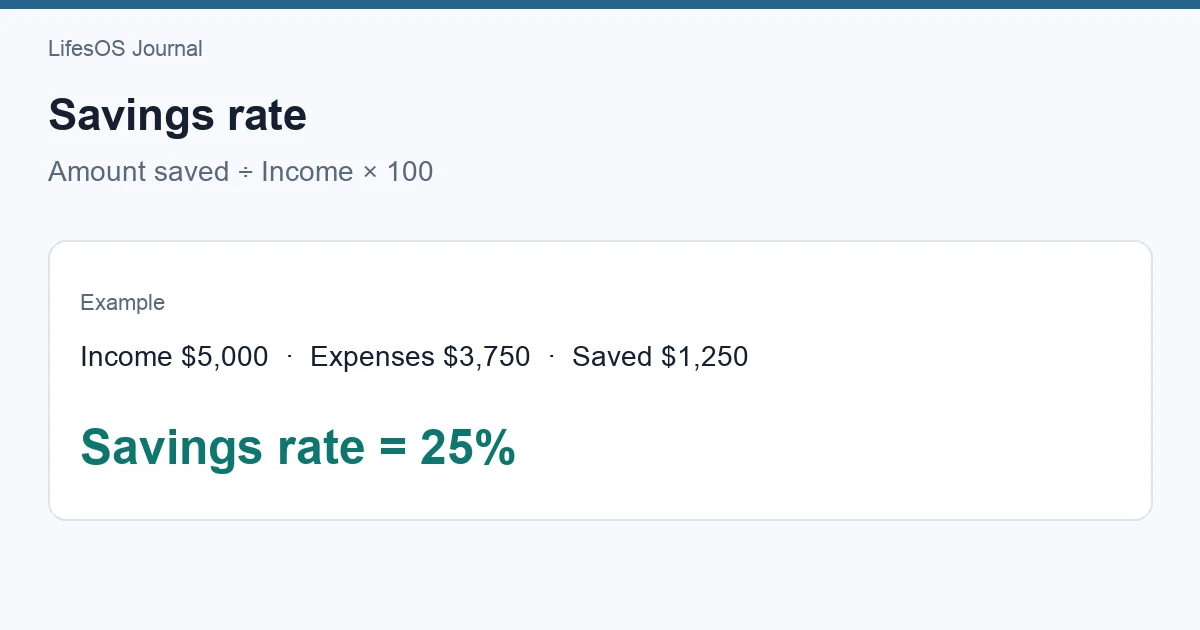
Savings rate (%) = Amount saved ÷ Income × 100
Where amount saved ≈ income − expenses for the same period (including intentional debt principal beyond interest if you count that as “saving/goal progress” — define your rule and stick to it).
Worked example
- Income: $5,000
- Expenses: $3,750
- Saved: $1,250
- Savings rate: 1,250 ÷ 5,000 × 100 = 25%
Try it: LifesOS savings rate calculator.
Gross vs net
Personal budgeting often uses take-home (net) income. Employer retirement contributions complicate “gross” math — pick a definition that matches how you decide day to day.
How to interpret
A rising rate with stable income usually means spending fell or intentional saving rose. A falling rate after a raise can mean lifestyle creep. Context matters more than a viral target percentage.
In LifesOS
Track income and expenses in Finance, review in weekly money review, and connect to your monthly budget.
Common definition variants
- Cashflow savings rate: (income − spending) / income
- Balance-sheet view: change in net worth / income (more advanced; includes investment moves)
For everyday budgeting, cashflow savings rate is usually enough. State your definition in your notes so month-to-month comparisons stay honest.
Counting debt paydown
Some people include extra principal payments in “saved/goal progress” because it improves net worth. Others keep savings rate for cash/investments only and track debt separately. Either works — pick one.
About “good” targets
Internet rules of thumb (e.g., 20%) are teaching tools. A household rebuilding after a move may run 5% temporarily while stabilizing. Another may run 40% with low housing costs. Judge the rate against your goals and runway.
FAQ
Do employer 401(k) matches count?
If you use gross income, include employer contributions carefully. If you use net income, track retirement separately to avoid double-counting confusion.
Educational general information only — not personalized financial advice. Adjust frameworks to your situation. LifesOS tools are informational, not advice.