Personal Finance
How to Create a Monthly Budget That Actually Works
A working monthly budget starts from take-home income, funds fixed costs and savings on purpose, and gets a short weekly review — not a perfect spreadsheet.
A monthly budget that works plans take-home income across fixed obligations, variable necessities, savings or debt payments, and leftover wants — then compares the plan to actual spending.
- Prefer net (take-home) income unless you deliberately budget from gross.
- Separate fixed vs variable costs so surprises are visible.
- Fund savings/debt as line items before leftover wants.
- Review weekly; rewrite monthly.
Build one in under an hour
- List reliable take-home income for the month.
- List fixed obligations (housing, utilities baseline, insurance, minimum debt, keep subscriptions).
- Estimate variable necessities (groceries, transport) from last month if possible.
- Set savings / extra debt payments as planned lines.
- Assign remaining money to wants + buffer. If negative, cut wants first.
- Track actuals and compare budget vs actual weekly.
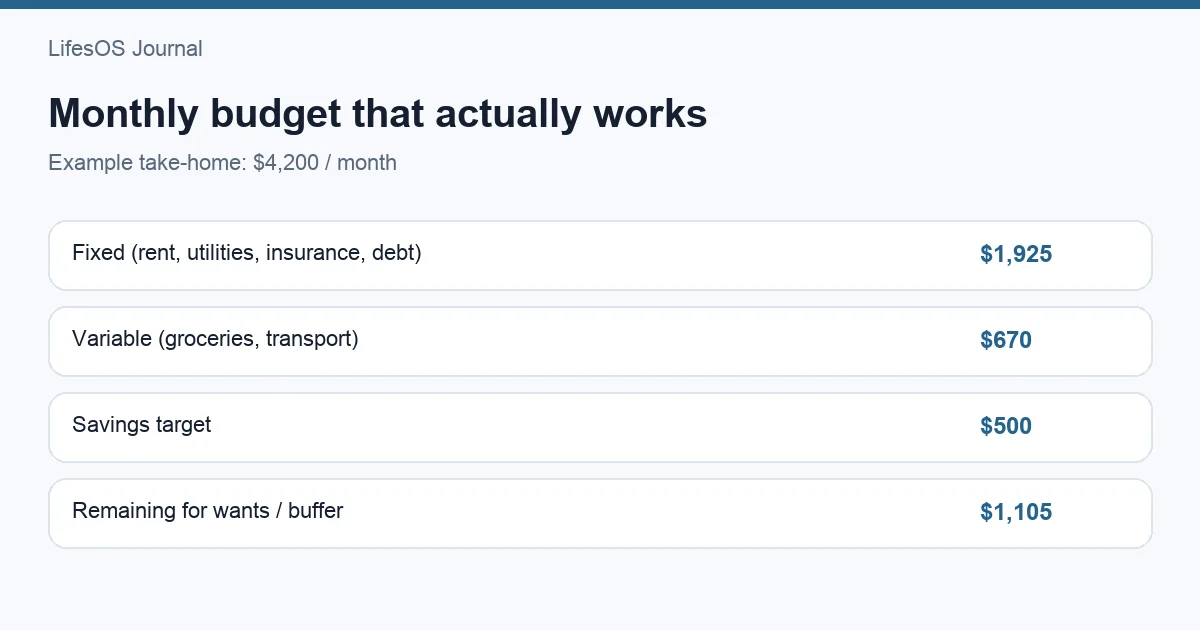
Worked example ($4,200 take-home)
| Category | Plan |
|---|---|
| Rent | $1,400 |
| Utilities | $180 |
| Insurance | $95 |
| Debt payment | $250 |
| Fixed subtotal | $1,925 |
| Groceries | $450 |
| Transport | $220 |
| Variable necessities | $670 |
| Savings | $500 |
| Remaining wants / buffer | $1,105 |
Check: $1,925 + $670 + $500 + $1,105 = $4,200. Illustration only — housing costs vary by location.
About 50/30/20 and other rules
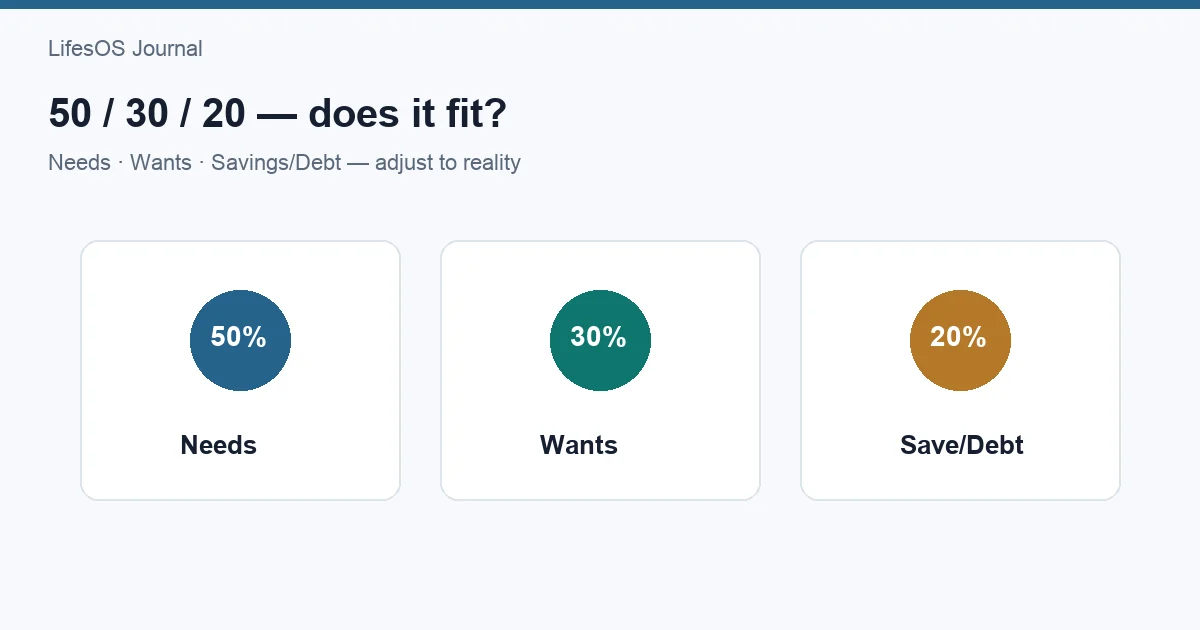
Frameworks like 50/30/20 or the Six Jars method are starting points, not universal laws. High rent, irregular income, or aggressive debt payoff often need different splits.
Common mistakes
- Budgeting from gross you never receive
- Ignoring irregular annual costs (use sinking funds)
- No weekly check until month-end
- Zero buffer, so every surprise feels like failure
In LifesOS Finance
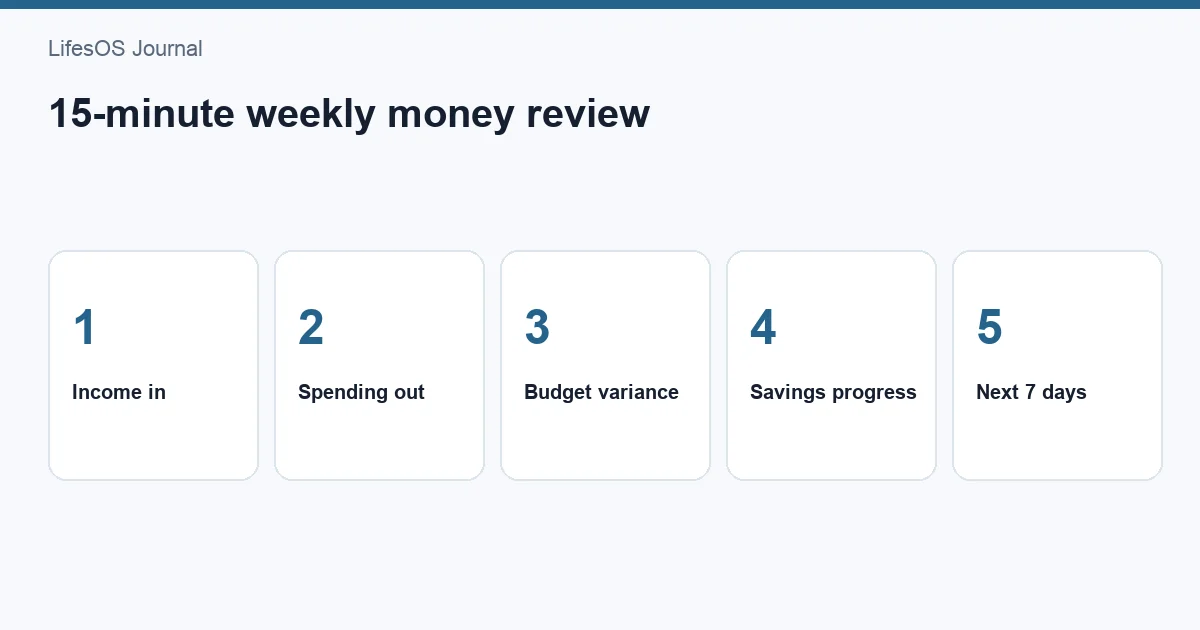
Set category budgets in Finance, log with AI-assisted input, and review variance via a weekly money review or Weekly Report.
Income: what to include
Include pay you can reasonably expect this month. Exclude speculative bonuses until they clear. If you are paid biweekly, convert to a monthly view carefully (biweekly × 26 ÷ 12) or budget by paycheck cycle instead of calendar month — both are valid if consistent.
Fixed vs variable in plain language
Fixed costs change rarely month to month (rent, insurance). Variable costs flex with behavior (groceries, transport, dining). Mixing them hides the dials you can actually turn this week.
Debt on the budget
Minimum payments belong with obligations. Extra principal payments belong with goals/savings if that matches how you motivate yourself — the important part is that “extra debt paydown” is planned, not accidental leftover.
The monthly rewrite loop
- Week 1–3: weekly variance checks
- Week 4: rewrite next month’s targets using actuals
- Keep one “learning note” (e.g., groceries underestimated by $80)
Budgets fail when they are moral documents. They work when they are forecasting tools.
FAQ
Should every dollar be assigned?
Zero-based budgeting says yes. If that feels rigid, keep a named buffer category so “unassigned” is still intentional.
What about couples?
Agree on shared categories and privacy boundaries first. Tools matter less than the decision rules.
Related: Adapt for variable pay with budgeting on irregular income and clarify categories via needs vs wants.
Sources
- U.S. Consumer Financial Protection Bureau — budgeting basics (consumerfinance.gov)
- Track expenses without daily friction · Savings rate
Educational general information only — not personalized financial advice. Adjust frameworks to your situation. LifesOS tools are informational, not advice.