Personal Finance
Needs vs Wants: How to Categorize Your Spending
Needs cover the minimum cost of protecting health, safety, income, and essential obligations; wants improve comfort, convenience, or enjoyment. Context determines many borderline expenses.
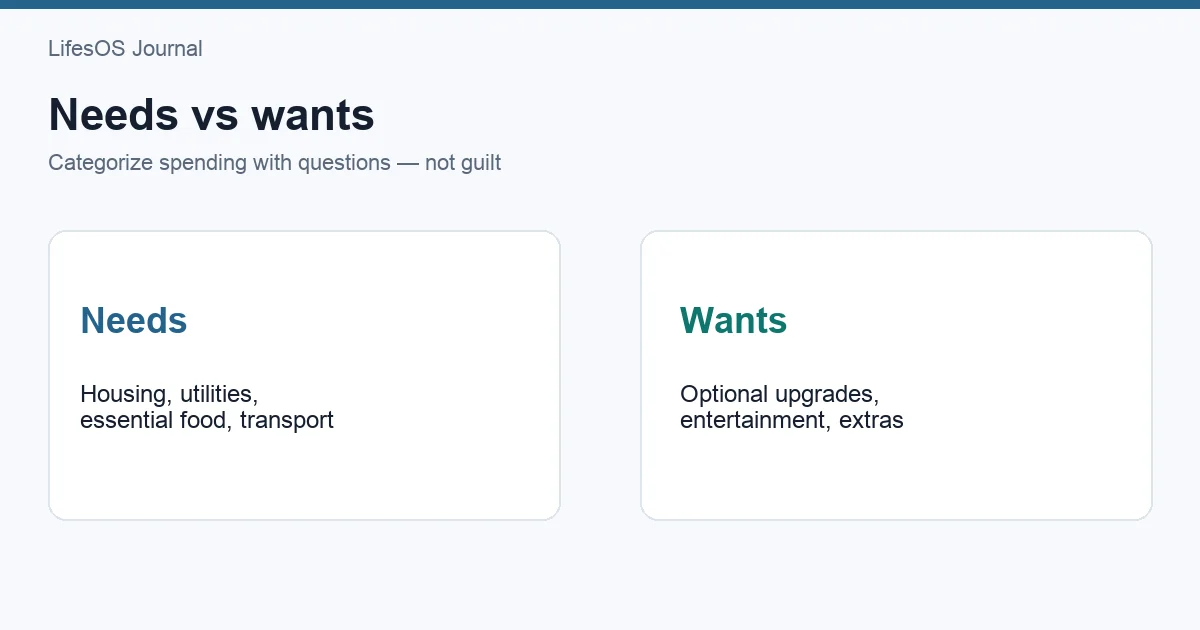
A need is spending required to protect basic health, safety, housing, income, or unavoidable obligations; a want improves comfort, convenience, status, or enjoyment. The category depends on context and often on the portion of the cost. Transportation to work may be a need, while the premium features of a particular vehicle are wants. The useful question is not whether an item is universally good or bad, but what minimum version is necessary in your situation.
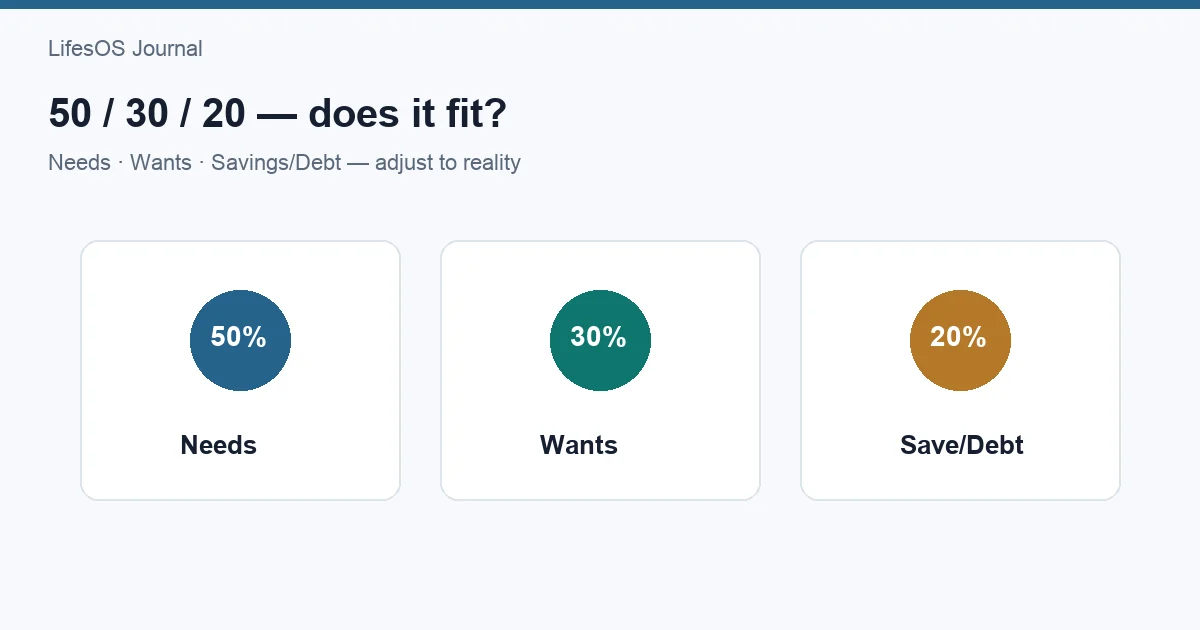
This is a categorization framework, not the 50/30/20 budget rule. A ratio rule suggests how much income might go to broad groups. Needs-versus-wants analysis helps decide where an expense belongs. You can use the classification with any budget method.
A practical definition
- Need: without it, you would face a serious near-term consequence involving health, safety, shelter, required obligations, or the ability to earn income.
- Want: without it, life may be less comfortable, convenient, expressive, or enjoyable, but the serious consequence does not occur.
- Mixed expense: a necessary function combined with optional quality, quantity, speed, brand, or convenience.
Most arguments happen in the mixed category. A phone may be necessary for work and emergencies. Unlimited premium data, annual upgrades, or an expensive device may be optional. Splitting the expense into a necessary base and an optional upgrade is often more accurate than forcing the entire bill into one label.
Needs vs wants examples
| Expense | Usually Need/Want | Depends on | Questions |
|---|---|---|---|
| Housing | Need; upgrades may be wants | Safety, location, household size | What is the lowest safe, workable option? |
| Groceries | Need; premium choices may be wants | Health, dietary needs, waste | Does this nourish the household at a reasonable cost? |
| Restaurant meal | Usually want | Travel, disability, work conditions | Was a practical food alternative available? |
| Car | Mixed | Transit, commute, care duties | Is a car required, and what level is sufficient? |
| Internet | Often need | Work, school, alternatives | Which speed is necessary for real use? |
| Phone | Often need | Work and safety requirements | Which device and plan meet the function? |
| Clothing | Mixed | Climate, workplace, current wardrobe | Is this replacement, requirement, or variety? |
| Childcare | Often need | Work, household support, safety | Is it required to earn income or provide care? |
| Gym membership | Usually want | Medical needs, alternatives, use | Is this the practical way you maintain health? |
| Insurance | Often need | Law, risk, assets, dependents | Which coverage is required or prudent? |
| Streaming | Want | Rare accessibility or education needs | Would losing it create harm or inconvenience? |
| Debt payment | Required obligation | Contract terms and strategy | What minimum is due, and is extra payment a goal? |
Five questions for any expense
- What happens if I do not pay for this? Distinguish serious consequences from disappointment or inconvenience.
- What function does it serve? Name the underlying job: shelter, nutrition, transport, communication, care, or recreation.
- What is the minimum viable version? Identify the lowest-cost option that safely performs the necessary function.
- Is the timing necessary? An eventual replacement may be needed even when buying it today is optional.
- Does my context change the answer? Disability, location, work, dependents, safety, and available alternatives matter.
Write the answers rather than relying on instinct. Marketing often presents convenience as necessity, while overly strict budgeting can mislabel every quality-of-life expense as waste. Clear reasoning avoids both extremes.
Separate the function from the upgrade
When an expense is mixed, estimate the necessary base cost and classify the remainder as a want. Suppose reliable transportation is required. A workable used car might cost $350 per month including payment and insurance, while the chosen vehicle costs $590. You could classify $350 as the necessary transportation baseline and $240 as the optional upgrade.
The split does not need false precision. Its purpose is to show where flexibility exists. Apply the same thinking to housing, food, clothing, phones, internet, travel, and insurance. The necessary function can remain protected during a cutback while the upgrade portion becomes an explicit tradeoff.
Context can change the category
A rideshare trip is usually convenience spending for someone with safe public transit. It may be necessary for a night-shift worker after transit stops running. Meal delivery may be optional in an ordinary week and temporarily necessary during illness. High-speed internet may be excessive for basic browsing and essential for a remote video-production job.
Do not use another household's label without their circumstances. At the same time, context should explain the expense, not become an automatic defense of any price. Ask whether a less expensive option can meet the same real requirement.
Required does not always mean a basic need
Some costs are contractually required because of earlier choices. A minimum credit-card payment must be paid, but the purchases that created the balance may have included wants. Likewise, a lease payment is an obligation even if the vehicle was more expensive than necessary.
Classify required payments clearly so cash-flow planning protects due dates. Then preserve the history: label the payment as an obligation rather than rewriting all underlying spending as a need. This distinction helps future decisions without ignoring present commitments.
Use the categories in your budget
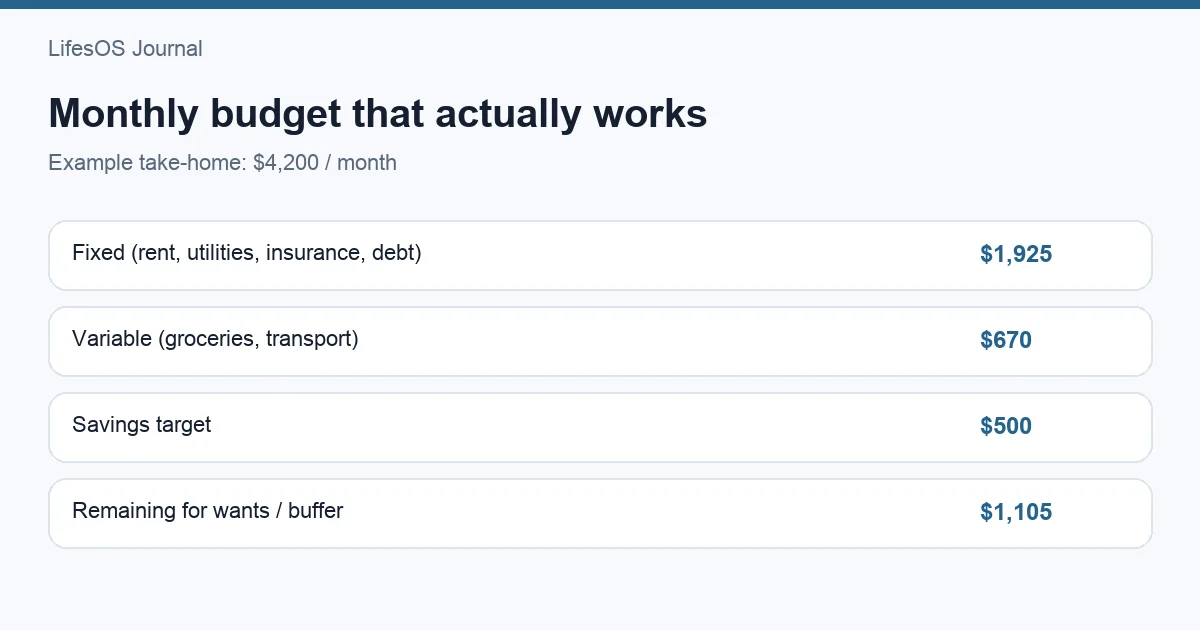
Begin with tracked expenses from a representative month. Mark each as need, want, mixed, or unclear. For mixed expenses, estimate the base and upgrade portions. Total the categories, then compare them with take-home income and your goals.
When you create a monthly budget, fund needs and required obligations first. Next fund important goals and predictable irregular costs. Then choose wants deliberately rather than treating them as accidental leftovers. A budget with no wants may be difficult to sustain; the objective is conscious tradeoffs, not deprivation.
| Step | Action | Result |
|---|---|---|
| 1 | Classify last month's transactions | Current needs/wants baseline |
| 2 | Split mixed expenses | Visible optional upgrades |
| 3 | Protect essential minimums | Core monthly plan |
| 4 | Choose goal contributions | Progress is funded |
| 5 | Set a wants allowance | Flexible spending has a limit |
How to cut spending without cutting blindly
If the budget does not balance, start with low-value wants, duplicated services, and upgrades you would not buy again. Next reduce the optional portion of mixed expenses. Renegotiate or replace larger recurring costs before focusing only on small treats. A housing, transport, or insurance change can matter more than dozens of tiny purchases, though large changes may take longer.
Then review needs for efficiency rather than elimination: reduce food waste, compare insurance, adjust utility use, or choose lower-cost essentials. Avoid cuts that create larger costs, such as dropping necessary medicine, maintenance, or insurance. For behavior-focused strategies, read how to stop overspending.
Use LifesOS Finance to organize expenses, see category totals, and test tradeoffs before the next month begins. Download LifesOS to build a spending plan around your actual priorities.
Wants are not mistakes
Travel, hobbies, celebrations, good food, convenience, and personal style can make life meaningful. Calling them wants means they are flexible relative to essentials, not that they are irresponsible. A healthy budget can include them when obligations and priorities are covered.
Rank wants by value. Ask which purchases you remember, use repeatedly, or would miss. Cut low-value recurring leakage before a high-value experience you planned for. A clear wants allowance can reduce guilt because the money was assigned intentionally.
Classifying expenses with a partner or household
Two people can agree on the function and disagree about the minimum acceptable version. One may see a second car as essential; another may see alternatives. Discuss the consequence, available options, time cost, care duties, and total household impact. Avoid using “want” as an accusation.
Document the rule you agree on, such as: transportation required for work is a need; features beyond reliability and safety are wants. Consistent household rules are more useful than winning a debate about one transaction.
Common classification mistakes
- Calling every recurring bill a need: repetition does not make a service essential.
- Calling all food a need: nutrition is necessary, but price, waste, and convenience vary.
- Ignoring quality and safety: the cheapest option is not always viable.
- Confusing urgent with necessary: a sale ending today creates urgency, not need.
- Using labels as judgment: categories support decisions; they do not measure character.
- Forcing mixed costs into one box: separate the basic function from the upgrade.
Quick classification checklist
- State the function the purchase serves.
- Name the serious consequence of going without it.
- Identify realistic alternatives available to you.
- Estimate the minimum safe and workable cost.
- Separate convenience, brand, quantity, and upgrade costs.
- Check whether the timing is required.
- Record the rule so next month's classification stays consistent.
FAQ
Is internet a need or a want?
Internet is often a need for work, school, healthcare, or essential services. The necessary speed and plan depend on actual use. Premium speed, bundled entertainment, or extra features may be wants.
Are groceries always needs?
Basic nutritious groceries are needs, while some premium brands, excess quantities, specialty treats, and convenience items may be wants. Medical diets, local prices, time, and accessibility affect the reasonable baseline.
Is a car a need?
A car may be necessary where safe, reliable alternatives do not support work or care responsibilities. Even then, the need is dependable transportation; luxury features, additional vehicles, or frequent upgrades may remain wants.
Should I eliminate wants when paying debt?
Not necessarily. A temporary reduction may accelerate progress, but eliminating every enjoyable expense can make the plan hard to maintain. Protect minimum obligations, set a realistic goal, and keep a deliberate amount for high-value wants when feasible.
How often should I recategorize spending?
Review categories when your job, health, household, location, or available alternatives change. Otherwise, a monthly check is enough to catch new subscriptions, upgrades, and expenses that shifted from occasional to routine.
Clear categories make tradeoffs visible without turning spending into a moral scorecard. Try LifesOS to organize needs, wants, and goals in one practical budget.
This article provides general educational information, not personalized financial, investment, tax, or legal advice. Consider your circumstances and consult a qualified professional when needed.