Nutrition
How to Build a Weekly Meal Planning Routine
A useful weekly meal planning routine starts with your calendar, chooses a small set of flexible meals, creates one practical shopping list, and leaves room for change.
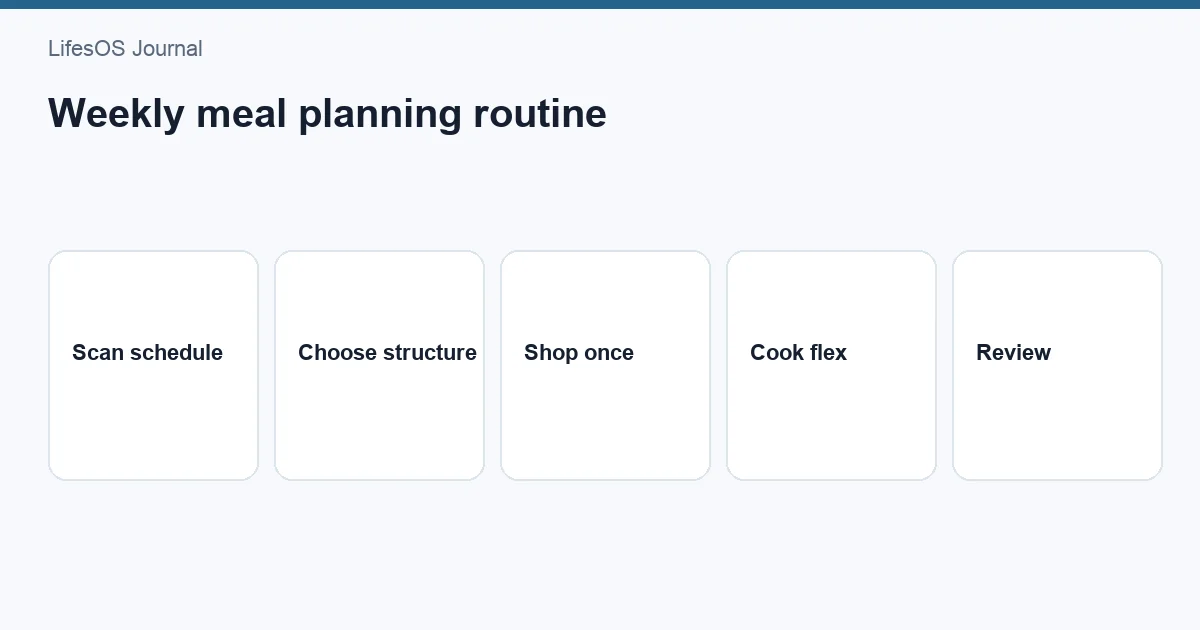
A weekly meal planning routine is a short, repeatable process for deciding what you will eat, when food preparation can realistically happen, and what groceries you need. Start with your calendar, plan only the meals that need decisions, use a simple protein-carbohydrate-fat structure as a practical prompt, and keep one or two flexible options for schedule changes.
The objective is not to predict every appetite or create a perfect menu. It is to reduce avoidable decisions during the busiest parts of the week. A good plan makes ordinary meals easier while allowing dinners out, leftovers, changing energy, and unexpected commitments.
Why meal planning should begin with the schedule
Many meal plans fail because they are written as if every evening has the same amount of time. A recipe that works on a quiet Sunday may be unrealistic between a late meeting and an evening commitment. Before choosing meals, review the same calendar you use to plan your week.
Mark the constraints that affect food: early starts, commuting, classes, caregiving, training, travel, social meals, and nights when cooking time is limited. Also note realistic preparation windows. A free hour on paper may include travel, cleanup, or recovery and may not be truly available.
| Schedule condition | Meal-planning response |
|---|---|
| Late meeting | Use a prepared meal, leftovers, or a fast assembly meal |
| Early departure | Prepare breakfast or portable components the night before |
| Busy lunch period | Pack a meal or identify a reliable nearby option |
| Social dinner | Do not buy ingredients for a competing home meal |
| Open weekend block | Cook one component that can support several meals |
This connection between Nutrition and Schedule is the foundation of a plan you can actually use.
The six-step weekly meal planning routine
1. Review what is already available
Check the refrigerator, freezer, pantry, and any food that should be used soon. Write down useful ingredients rather than trying to remember them while shopping. Existing rice, frozen vegetables, eggs, beans, sauces, or cooked protein can become anchors for the first meals of the week.
This step reduces duplicate purchases and helps prevent a plan that ignores food already at home. It also makes the shopping list more accurate.
2. Read the week for constraints
Identify meals that are already decided, such as a work lunch or family dinner. Then find the high-friction periods. Ask: Which mornings begin early? Which evenings have less than 30 minutes? When can food preparation happen without displacing sleep or another priority?
Plan around those answers. Do not assume that motivation will create time later.
3. Choose a small meal structure
Plan fewer unique recipes than there are days. Two breakfasts, two lunches, and three or four dinners can provide variety without requiring a different ingredient set for every meal. Reuse components in different forms: roasted vegetables can accompany a grain bowl, fill a wrap, or become a side dish.
A simple meal prompt is protein source + carbohydrate source + produce + fat or flavor. This is not a prescription or a requirement to calculate every nutrient. It is a quick way to notice whether a meal has enough structure to be satisfying and practical.
- Eggs, toast, fruit, and avocado.
- Yogurt, oats, berries, and nuts.
- Chicken or tofu, rice, vegetables, and sauce.
- Beans, tortillas, salsa, vegetables, and cheese.
- Fish or lentils, potatoes, salad, and dressing.
Needs and preferences vary. Allergies, medical conditions, pregnancy, eating-disorder history, athletic training, and other circumstances may require individualized guidance from a qualified professional.
4. Assign meals by effort, not only by day
Label meals as ready, assembly, quick cook, or longer cook. Match effort to capacity. Put longer cooking on an open evening and save an assembly meal for the day with multiple commitments.
| Effort level | Example | Best use |
|---|---|---|
| Ready | Prepared leftovers or freezer portion | Late arrival |
| Assembly | Sandwich, grain bowl, yogurt bowl | Short break |
| Quick cook | Eggs and toast, pasta with vegetables | Ordinary weekday |
| Longer cook | Soup, roast, multi-component recipe | Open weekend or evening block |
5. Build one consolidated shopping list
Translate meals into ingredients, subtract what you already have, and group the list by store section. Include realistic quantities and distinguish essentials from optional extras. If one ingredient appears in only one complicated recipe, consider whether it adds enough value.
Plan for actual household behavior. If prepared vegetables are more likely to be eaten than whole vegetables during a demanding week, convenience can be a rational choice. If budget matters, compare unit prices, favor versatile staples, and plan to use perishable items earlier.
6. Schedule the minimum preparation
Meal preparation does not have to mean cooking seven complete meals on Sunday. Choose the smallest work that removes weekday friction: wash produce, cook a grain, prepare one protein, portion snacks, mix a sauce, or move a freezer meal to thaw safely.
Place that preparation block on the calendar. Thirty focused minutes that happens is more useful than an ambitious session that repeatedly gets skipped.
Use nutrition awareness without turning the plan into constant counting
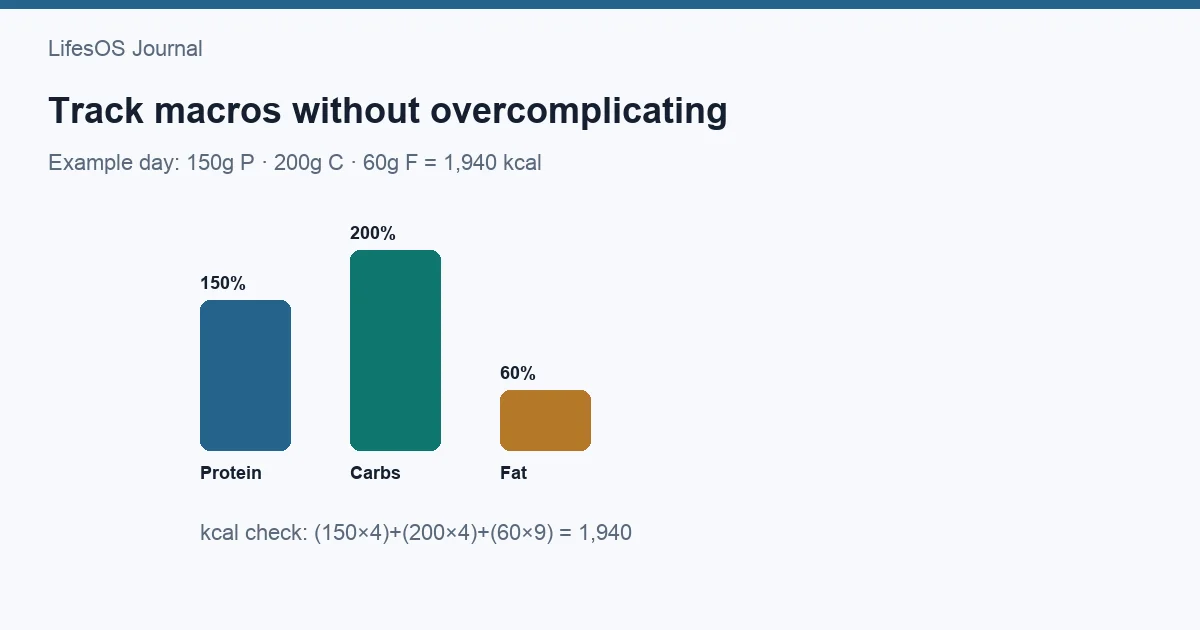
Meal planning can support general awareness of protein, carbohydrates, and fats without requiring precise daily targets. Protein-containing foods can contribute to satiety and many body functions; carbohydrates provide an important energy source; fats support flavor and essential functions. The amounts that suit an individual vary.
If protein is a practical concern, distribute familiar protein sources across meals rather than trying to correct the entire day at dinner. For educational context and limitations, see how much protein you need.
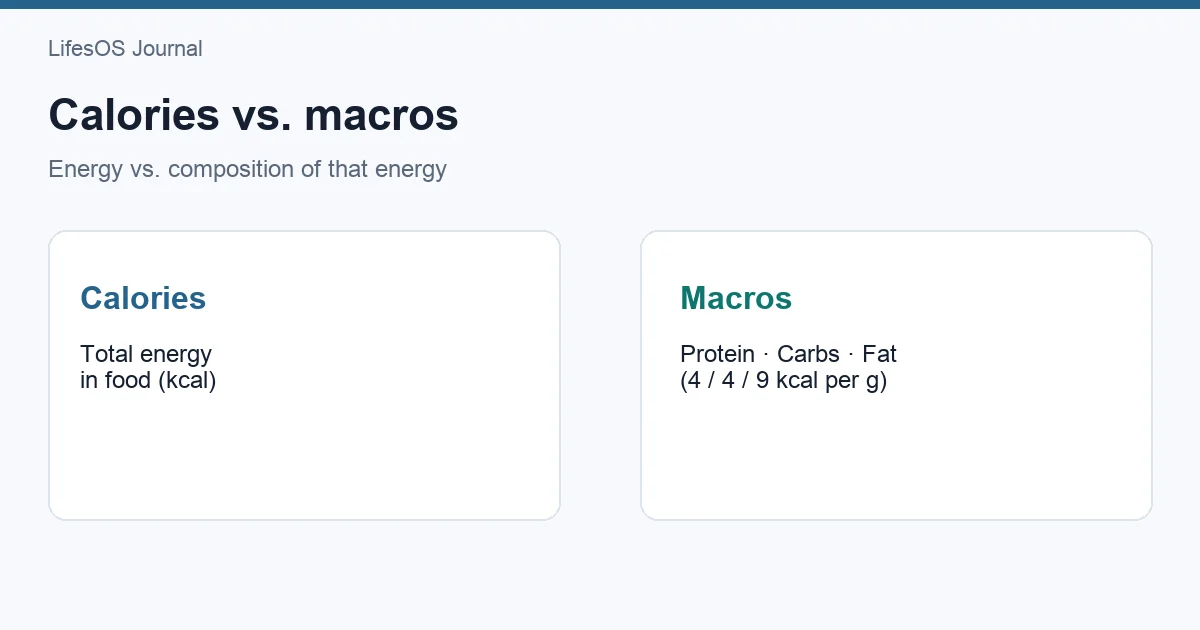
Calories and macronutrients describe different aspects of food. Neither number alone measures overall diet quality or personal suitability. Read calories versus macros for a clearer comparison.
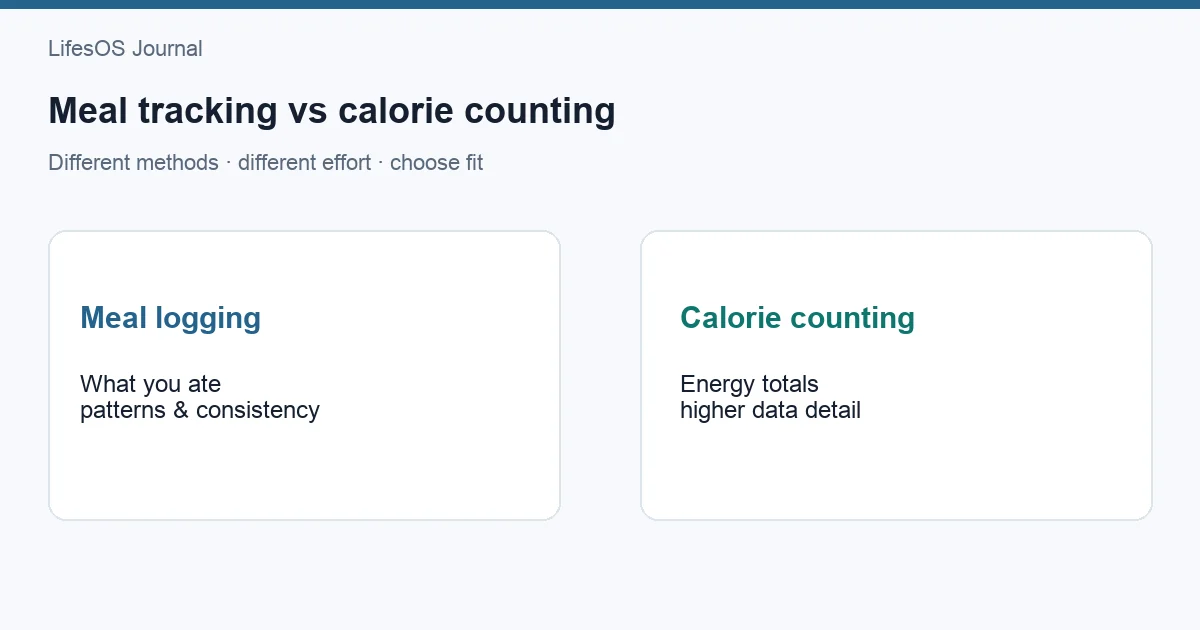
You can also choose lighter tracking. Meal tracking versus calorie counting explains how a simple meal record can answer planning questions without estimating every amount. Track only if the information supports a decision and does not create distress or compulsive behavior.
A practical weekly template
| Day | Constraint | Dinner plan | Fallback |
|---|---|---|---|
| Monday | Ordinary workday | Grain bowl using prepared components | Eggs and toast |
| Tuesday | Late meeting | Leftovers | Freezer meal |
| Wednesday | Open evening | Cook a larger pasta or curry | Quick pasta |
| Thursday | Short transition | Wednesday leftovers | Reliable takeout option |
| Friday | Social plan uncertain | Flexible meal | Use pantry ingredients |
| Saturday | More time | Longer recipe | Move recipe to Sunday |
| Sunday | Planning window | Simple dinner plus preparation | Prepare only essentials |
The fallback column is part of the plan, not evidence that the plan failed. It prevents one changed appointment from creating a chain of expensive or stressful decisions.
Build flexibility deliberately
Leave at least one meal unassigned if your week changes often. Keep several shelf-stable or frozen combinations available. Choose ingredients that can move between meals, and avoid preparing every perishable item at once.
Use a simple substitution rule: if the planned meal no longer fits, choose the fallback with the least additional effort. Do not force yourself to cook a complex recipe merely because it appears on a calendar.
Appetite also changes. A plan should guide options, not dictate that a person eat a fixed meal regardless of hunger, preference, or circumstance. Adjust quantities and timing using your own experience and appropriate professional guidance.
Make grocery shopping part of the routine
Choose a dependable shopping window and a backup. If possible, write the list in the same order you move through the store. This reduces forgotten items and impulse caused by repeatedly scanning every aisle.
- Confirm household staples before leaving.
- Check the calendar one final time for meals away from home.
- Prioritize perishables that appear in several planned meals.
- Keep a few convenient foods for low-capacity days.
- Store food promptly and follow food-safety guidance.
Online ordering may save time, while in-person shopping may offer better substitution control. Use the method that reduces total friction for your circumstances.
Review the plan in ten minutes
At the end of the week, compare the plan with what happened. Do not score yourself on perfect compliance. Ask which decisions became easier.
- Which planned meals were actually used?
- Which ingredients remained, and why?
- Where did the schedule invalidate the plan?
- Which fallback worked well?
- Was preparation too large or too small?
- What one adjustment belongs in next week?
A recurring review turns meal planning into a learning system. Over time, you build a list of meals that fit specific constraints: late meeting, 15-minute lunch, no-cook evening, low-cost week, or guests.
Common weekly meal planning mistakes
- Planning every meal from scratch. Repetition and leftovers reduce effort.
- Ignoring the calendar. Match cooking demands to real capacity.
- Buying aspirational ingredients. Choose food your household is likely to prepare.
- Using precise nutrition targets by default. Start with the minimum awareness your question requires.
- Having no fallback. Flexible options protect the routine.
- Preparing too much. Begin with one or two high-value components.
- Treating changes as failure. A plan is a decision aid, not a contract.
FAQ
How long should weekly meal planning take?
A basic review can take 15 to 30 minutes once you have a shortlist of familiar meals. Shopping and preparation are separate blocks. If planning takes much longer, reduce the number of unique recipes.
Do I need to meal prep everything?
No. Prepare only what removes meaningful friction. Cooking one grain, washing produce, or making two extra dinner portions may be enough.
How many meals should I plan?
Plan the meals that otherwise create difficult decisions. Leave meals flexible when plans or appetite commonly change, and account for leftovers and meals away from home.
Can I meal plan without counting calories?
Yes. You can plan meal timing, components, variety, groceries, and preparation without calculating calories. Choose tracking detail according to your purpose and wellbeing.
What if the week changes after I shop?
Move versatile ingredients to another meal, freeze suitable items, use perishables earlier, and switch to a fallback. Review the cause so the next plan includes more flexibility.
Start with one easier week
Set one weekly planning appointment, review your calendar, choose three or four flexible dinners, write one consolidated list, and schedule a small preparation block. Then review what reduced decisions.
Start a 7-day LifesOS trial to plan meals beside the schedule they must fit. The most useful weekly meal plan is not the most detailed one; it is the one that helps you shop, prepare, adapt, and eat with less friction.