Nutrition
How to Track Protein, Carbs and Fat Without Overcomplicating Your Diet
Track macros sustainably by prioritizing protein, using simple portion estimates, spot-checking the 4/4/9 calorie math, and avoiding all-or-nothing logging.
Macro tracking without overwhelm usually means prioritizing protein, estimating carbs and fat with simple portions, and accepting weekly averages — not weighing every leaf of lettuce forever.
- Not everyone needs macros; some only need protein awareness + overall intake.
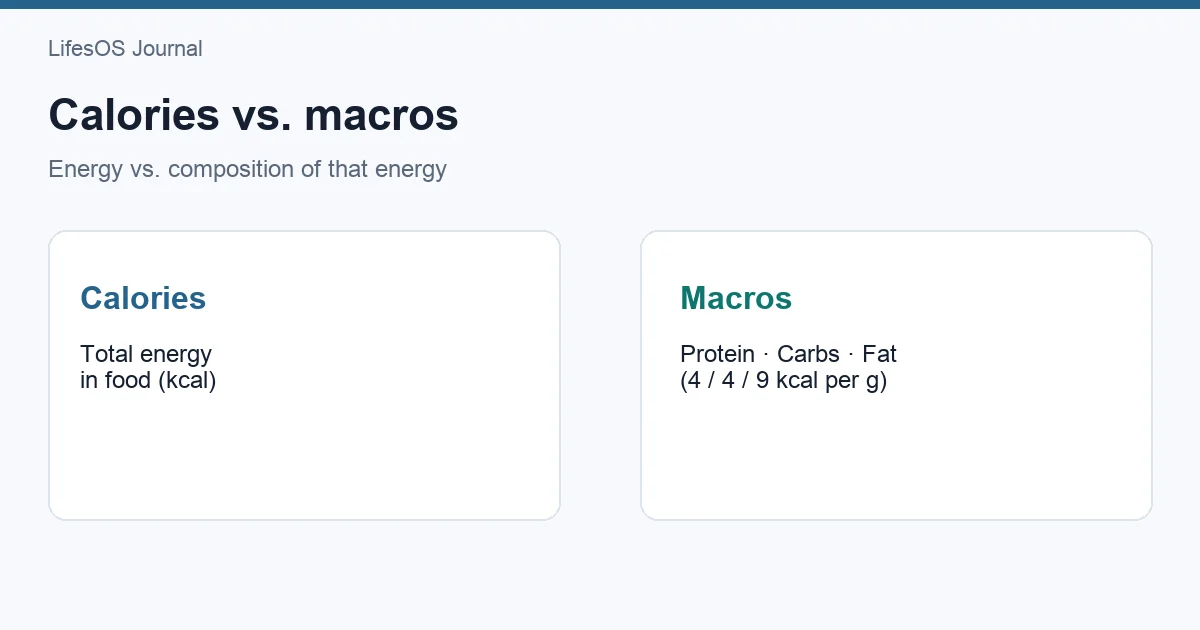
- Verify energy with 4 / 4 / 9 kcal per gram when you want a sanity check.
- Stop if tracking harms your relationship with food.
A lighter method
- Choose a protein target range (discuss specifics with a professional if you have medical needs).
- Build meals around a protein source first.
- Add carbs for fuel and fiber-rich plants; add fats for satiety.
- Log for 1–2 weeks to learn portions, then loosen to “pattern tracking.”
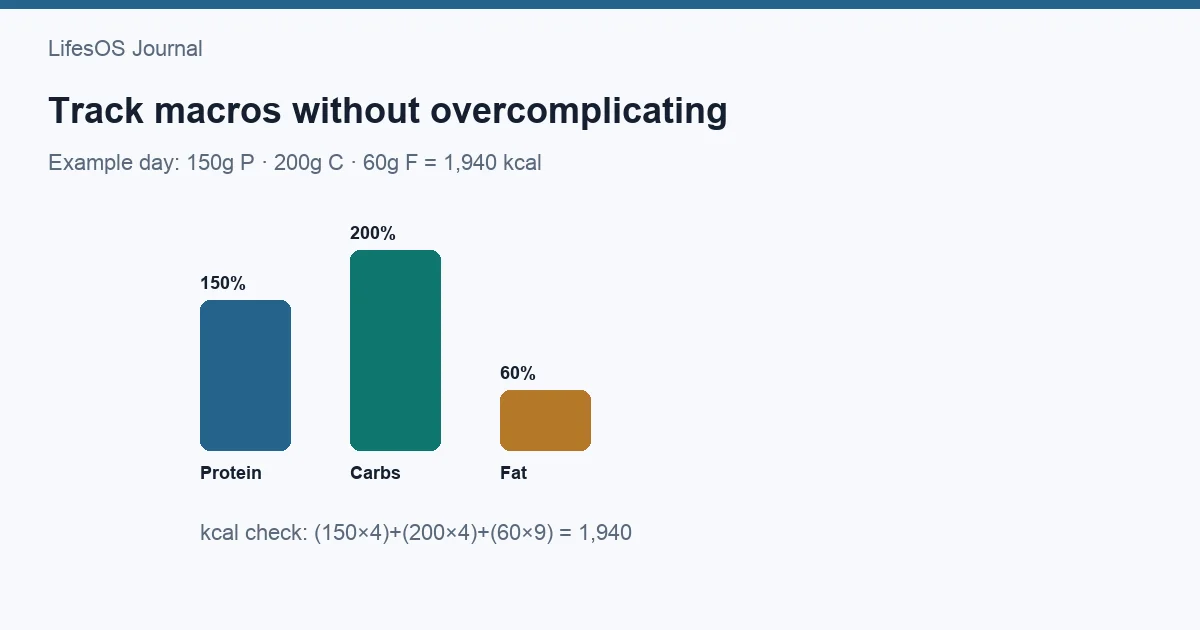
Example day (illustrative)
150 g protein · 200 g carbohydrate · 60 g fat → (150×4)+(200×4)+(60×9) = 1,940 kcal. Numbers are examples, not prescriptions.
Overcomplication traps
- Changing targets daily
- Ignoring hunger/energy signals
- All-or-nothing: one untracked meal → abandon the week
In LifesOS Nutrition
Log meals in Nutrition, draft entries with AI input, and read calories vs macros for the concepts behind the numbers.
Why protein-first simplifies everything
When protein is roughly on track, many people naturally stabilize overall intake because meals become more satiating. Starting with three macro targets at once is a common reason beginners quit.
Good enough estimates
Use hand portions or familiar containers after a short calibration week. The goal is directional accuracy for decisions (“I am low on protein today”), not laboratory precision.
Eating out
Pick a protein anchor, estimate sides, and move on. Perfect restaurant macros are rarely available; consistency across weeks matters more.
FAQ
Should I track on rest days?
If the habit is fragile, track the same way daily. If the habit is solid, some people loosen weekends — intentionally, not accidentally.
Is macro tracking required for health?
No. It is a tool. Food quality, sleep, and medical guidance can matter more.
Educational general information only — not medical or dietary advice. Needs vary; seek qualified professionals for health decisions. LifesOS Nutrition is a tracking tool.