Nutrition
Calories vs. Macros: What Should You Actually Track?
Calories measure total food energy. Macros — protein, carbs, and fat — describe where that energy comes from. Track one, both, or neither based on your goal.
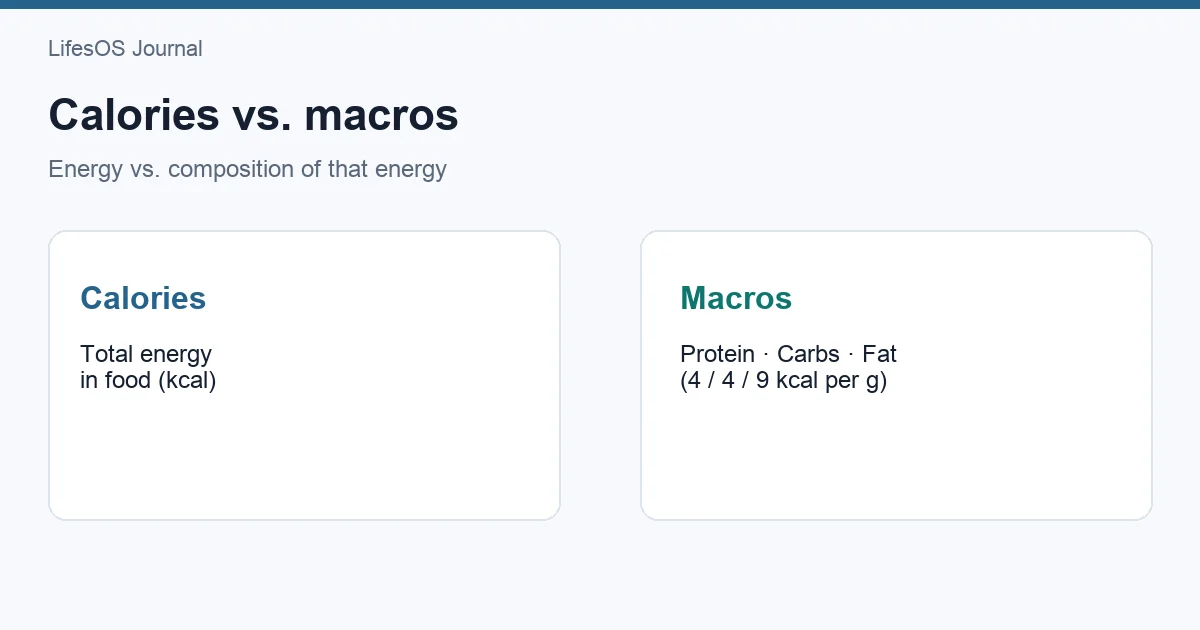
Calories measure energy. Macronutrients (protein, carbohydrate, fat) describe the composition of that energy. Tracking calories asks “how much?” Tracking macros asks “what mix?”
- Common energy densities on labels: protein ≈ 4 kcal/g, carbohydrate ≈ 4 kcal/g, fat ≈ 9 kcal/g.
- Macros imply calories; calories alone do not show protein adequacy.
- Many people do fine without daily tracking — awareness beats perfection.
Calories
On nutrition labels, “calories” usually means kilocalories (kcal). Over time, intake versus expenditure influences weight for many people, though health conditions and medications also matter.
Macros
- Protein — amino acids for tissues and many functions
- Carbohydrate — common fuel; fiber is carbohydrate not fully absorbed
- Fat — dense energy; supports fat-soluble vitamin absorption
Checkable example
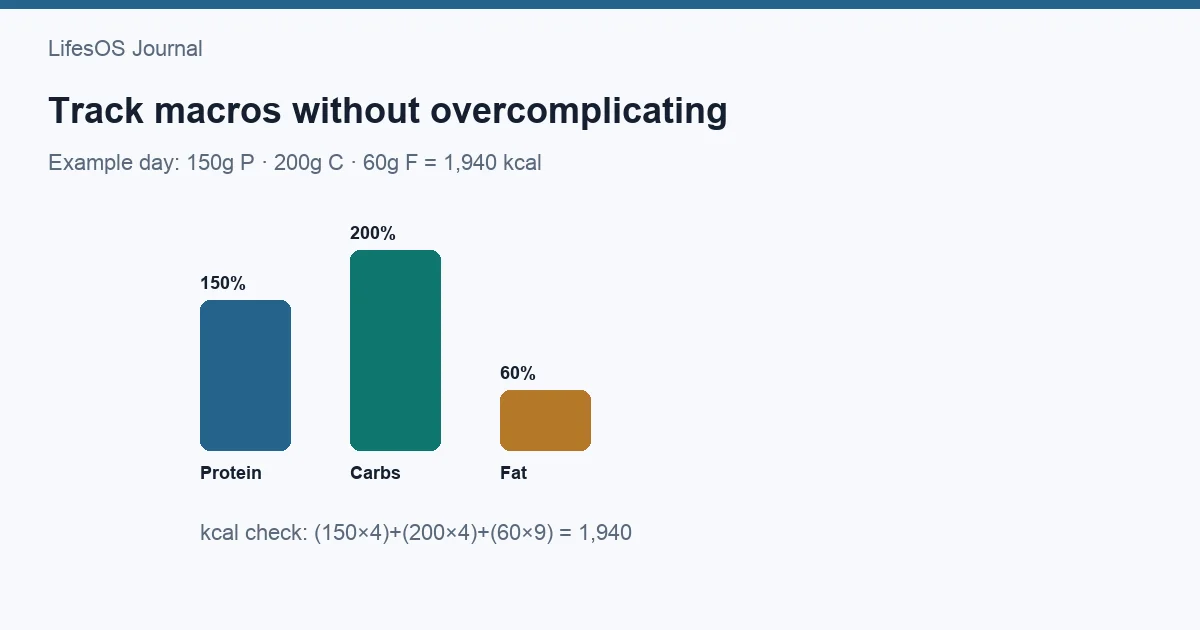
150 g protein + 200 g carbohydrate + 60 g fat ≈ (150×4)+(200×4)+(60×9) = 1,940 kcal. The same calories can come from very different mixes.
| If you care about… | Consider… |
|---|---|
| Energy balance | Calories or portions |
| Protein while cutting | Protein + calories |
| Training fuel distribution | Full macros |
| Habit building | Meal patterns, not daily precision |
When tracking helps or hurts
Short awareness phases help. Obsessive logging can increase stress. If anxiety rises, simplify.
In LifesOS
Nutrition logs meals and totals; AI input drafts entries for review. See how to track macros for a lighter method.
Reading a label without getting lost
Per-serving calories are an energy total. The macronutrient grams underneath explain composition. If a yogurt is 150 kcal with 15 g protein, a large share of its energy is protein-dense — useful if protein is your bottleneck.
Fiber and alcohol notes
Fiber is a carbohydrate that is not fully digested; labeling rules vary by country. Alcohol contributes energy (~7 kcal/g) and is not a classic “macro goal” in the protein/carb/fat sense, but it still counts toward total energy.
Matching tracking to goals
| Goal | Often enough | Optional deeper |
|---|---|---|
| General awareness | Portions / plate method | 1 week of calories |
| Body recomposition | Protein + calories | Full macros |
| Endurance training blocks | Carbs around sessions | Full macros |
| Medical nutrition therapy | Follow clinician guidance | — |
FAQ
Are all calories equal?
Energy is energy for accounting, but food quality, protein, fiber, and satiety change how sustainable a pattern feels.
Do I need an app?
No. Apps help with arithmetic and history. A notebook can work for a short learning phase.
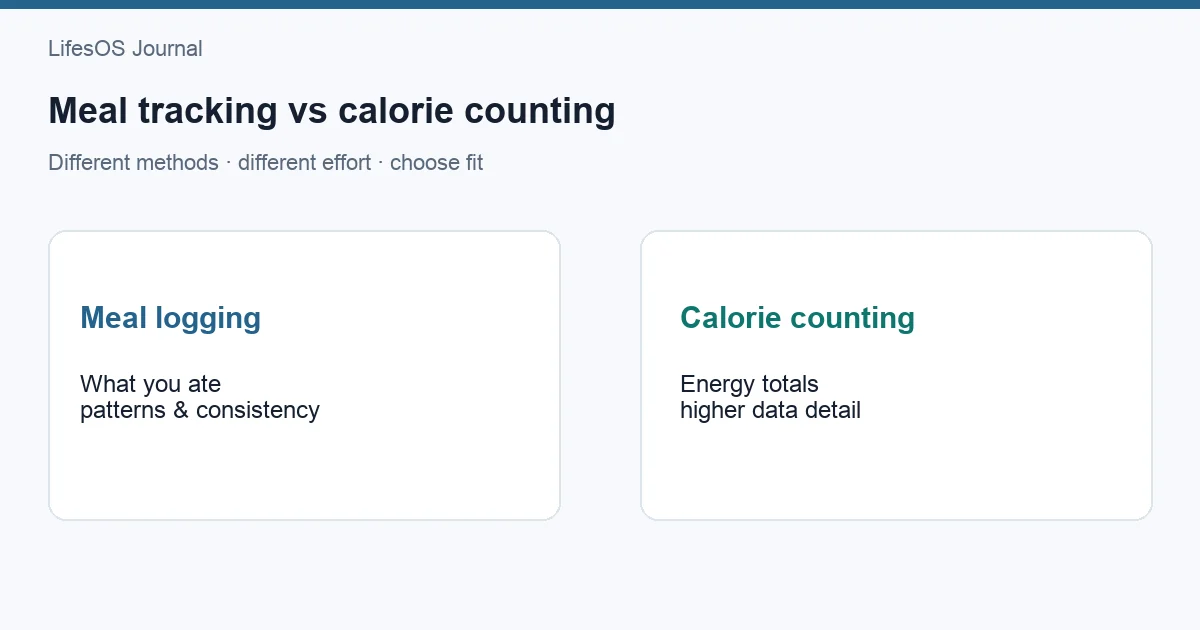
Related: Choose a method with meal tracking vs calorie counting.
Sources
- U.S. FDA — understanding nutrition labels
- NIH / MedlinePlus — macronutrient overviews
- WHO — healthy diet guidance (population-level)
Educational general information only — not medical or dietary advice. Needs vary; seek qualified professionals for health decisions. LifesOS Nutrition is a tracking tool.