Fitness & Activity
Walking Every Day: How to Build a Consistent Walking Habit
A daily walking habit becomes consistent when it has a reliable cue, a small minimum, a place in your schedule, and a fallback for disrupted days.
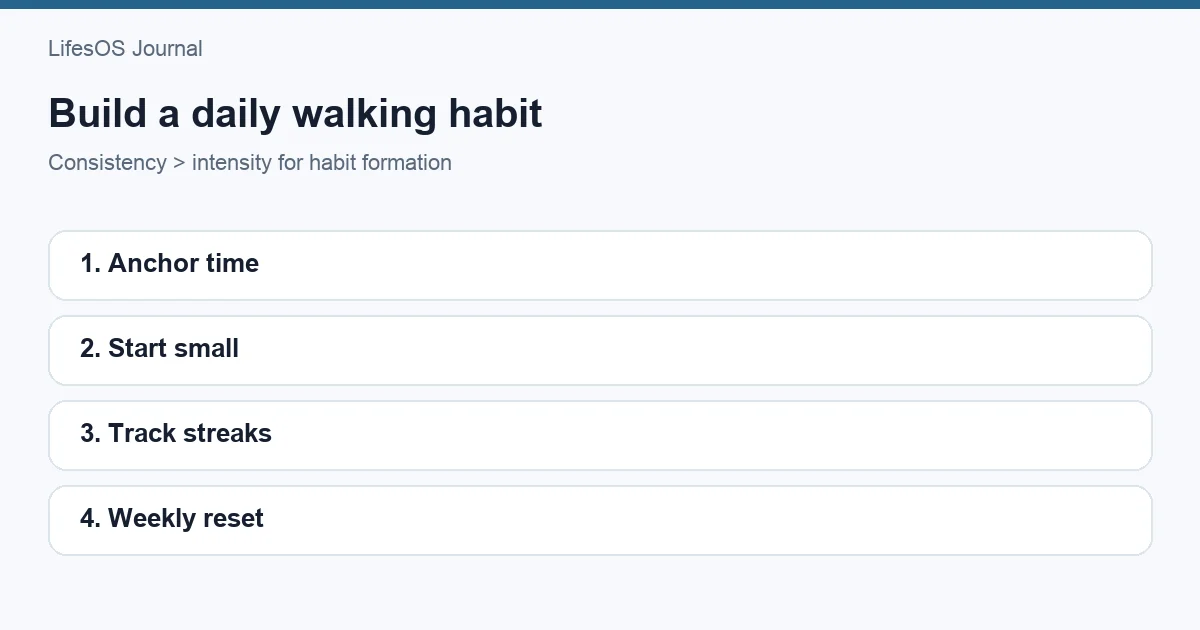
To build a daily walking habit, choose one reliable cue, set a small minimum you can complete on difficult days, schedule longer walks where they realistically fit, and track completion with minimal detail. Walking every day does not require the same route, pace, or duration. Consistency comes from returning to the routine, not protecting a perfect streak.
Walking can be transport, a work break, social time, or planned physical activity. That flexibility is its main advantage. It also means a vague goal such as “walk more” is easy to postpone. A useful routine specifies when you will begin, what counts on a constrained day, and how you will adapt for weather, safety, access, and energy.
This article provides general education, not medical advice or an individualized exercise prescription. If you have pain, symptoms, mobility concerns, a medical condition, are pregnant or postpartum, are returning after injury, or have been advised to limit activity, consult an appropriately qualified health professional. Stop and seek prompt medical guidance for concerning symptoms.
Walking counts toward physical activity
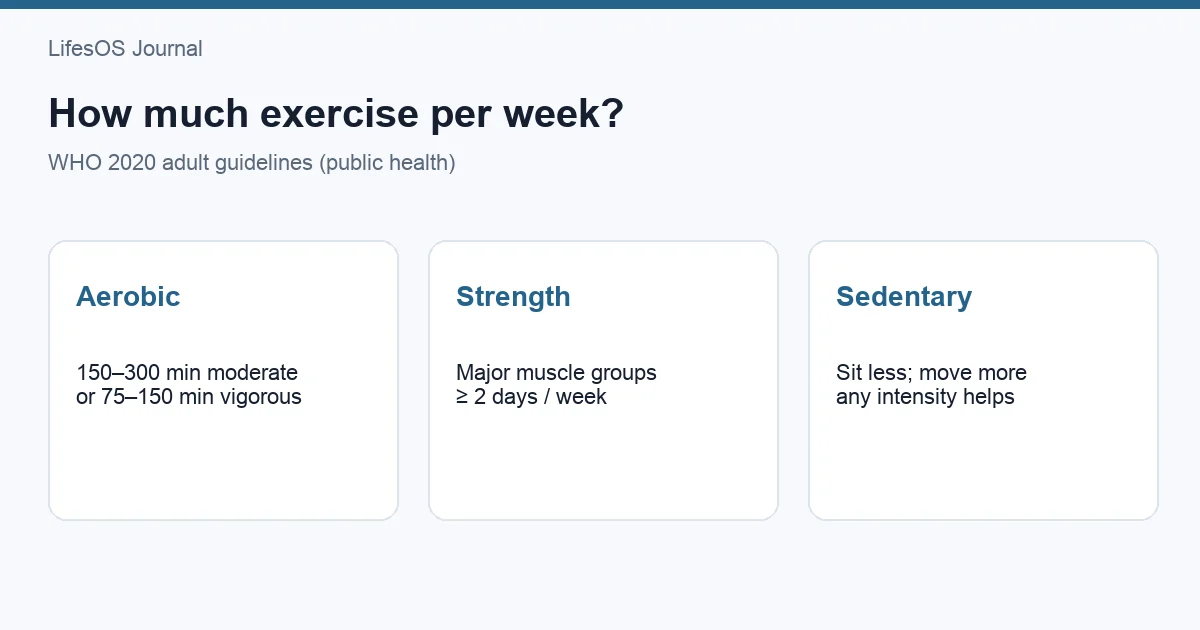
The World Health Organization's 2020 guidelines on physical activity and sedentary behaviour state that all physical activity counts. For adults, the general weekly recommendation is 150–300 minutes of moderate-intensity aerobic activity, 75–150 minutes of vigorous activity, or an equivalent combination, plus muscle-strengthening activity involving major muscle groups on two or more days.
Brisk walking can contribute to the aerobic total. Moderate intensity generally means your breathing and heart rate increase while you can still speak in sentences. An easy walk can still provide movement and interrupt sitting even if it does not reach moderate intensity.
These guidelines are population-level targets, not a pass-fail test for each day. The WHO emphasizes that some activity is better than none and that people who are inactive should begin with small amounts and increase gradually. For a full explanation of weekly volume, intensity, and strength work, read how much exercise you need per week.
Decide what “walking every day” means for you
A daily habit needs a clear definition. It might mean going outside for at least ten minutes, taking one purposeful walking break, or completing a route appropriate to your current ability. Choose a definition that is meaningful but not so demanding that one busy day ends the experiment.
| Version | Purpose | Example |
|---|---|---|
| Minimum | Keep the cue alive | Five minutes or an appropriate brief route |
| Normal | Repeatable daily baseline | 15–30 minutes at a comfortable or brisk pace |
| Expanded | Use extra capacity | A longer weekend walk or additional walking break |
The minimum is not a loophole or a claim that five minutes meets all weekly recommendations. It is a behavioral fallback. Your weekly activity can include normal walks, longer sessions, strength training, sport, cycling, or other suitable movement.
Attach walking to a stable cue
Time alone can be unreliable: “walk at 3:00” fails when a meeting runs late. A cue tied to an event is often stronger. Examples include after breakfast, after dropping someone off, at the beginning of lunch, after closing the laptop, or before an established evening routine.
Choose a cue that occurs on most days and a route available from that location. Make the first action obvious: put on shoes, step outside, or walk to a defined landmark. If preparation takes longer than the minimum walk, reduce friction by keeping suitable shoes, outerwear, mobility aids, water, or sun protection where the cue happens.
Write an if-then plan
Turn intention into a rule: “After lunch, I will walk for 15 minutes. If weather or work prevents that, I will use my indoor route for five minutes after my last meeting.” The fallback should be specific enough to begin without another planning session.
Put walking into the real schedule
Review the week before deciding when longer walks will happen. Mark fixed commitments, commuting, caregiving, meals, and sleep. Then reserve two or three dependable windows for normal or expanded walks. Daily minimum walks can attach to cues; longer activity benefits from calendar space.
| Constraint | Possible walking design |
|---|---|
| Meeting-heavy morning | Ten minutes at lunch and ten after work |
| Long commute | Walk a safe, accessible portion where practical |
| Caregiving schedule | Use a shared walk or a short route during a handoff |
| Unpredictable evening | Place the primary cue earlier in the day |
| Open weekend | Plan a longer route with a shorter fallback |
Include transition time. A 20-minute walk may need five minutes to change clothes and several minutes to return to the next commitment. A realistic block prevents walking from making the rest of the day late.
Use walking breaks during sedentary days
Not every walk needs to be a formal workout. Short breaks can divide long seated periods and accumulate movement. Walk while making an appropriate phone call, take a lap between focused work blocks, use stairs if suitable, or visit a colleague instead of sending a message.
Walking breaks work best when they are triggered, not left to memory. Set a user-chosen calendar reminder, pair a lap with refilling water, or walk after completing a recurring task. Avoid excessive alerts that become background noise.
Short bouts can contribute to weekly activity; the WHO guidance does not require aerobic activity to occur in blocks of at least ten minutes. Intensity still matters when counting moderate or vigorous minutes, so distinguish an easy movement break from a brisk walk rather than assuming every step is equivalent.
Progress without making every walk harder
Once the habit is stable, change one variable at a time. Add five minutes to two walks, include a slightly longer route, or make part of a walk brisker if appropriate. Do not simultaneously increase daily frequency, duration, pace, and hills.
Progress can also mean better consistency, easier startup, or a safer route—not only more distance. If discomfort, excessive fatigue, or other concerning symptoms appear, reduce or stop the activity and seek qualified guidance as appropriate.
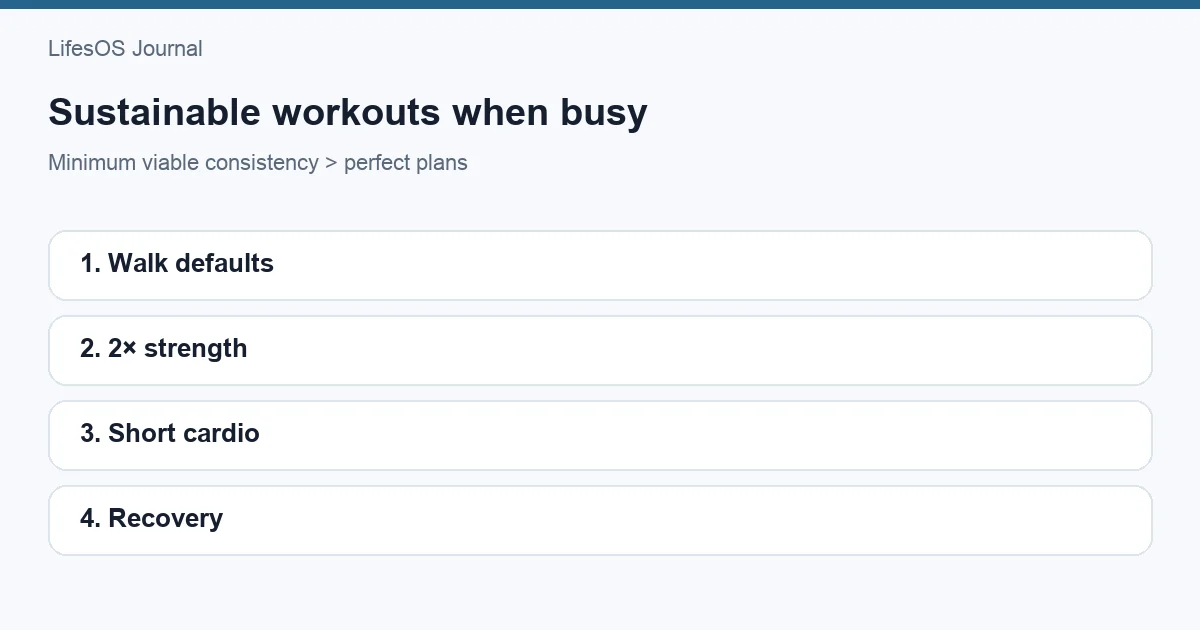
A walking habit does not replace every form of activity. Muscle-strengthening work remains part of WHO guidance for adults. A sustainable workout routine when busy can combine walking with realistic strength sessions and recovery.
Track only what helps the habit
Simple tracking is often enough: date, approximate duration, and perhaps whether the walk was easy, moderate, or brisk. You may add the cue or route if you are testing which conditions support consistency.
| Question | Minimum useful data |
|---|---|
| Am I beginning consistently? | Completed yes/no and cue |
| Which time works best? | Start time and completion |
| Am I accumulating brisk walking? | Duration and approximate intensity |
| Why are walks missed? | One short reason category |
| Is the routine growing too quickly? | Weekly duration and recovery notes |
Phone or wearable step counts can be convenient, but they are estimates and may not capture all movement equally. A universal step goal is unnecessary for building the cue. Use LifesOS Activity to record the level of detail that supports your weekly decision, not to turn every movement into a score.
A sample walking week
| Day | Primary plan | Fallback |
|---|---|---|
| Monday | 20-minute brisk walk after lunch | Five-minute indoor route |
| Tuesday | Two 10-minute work breaks | Walk after final meeting |
| Wednesday | 25-minute morning walk | Short after-breakfast route |
| Thursday | 15-minute social walk | Minimum solo route |
| Friday | 20 minutes after work | Walk before dinner |
| Saturday | 45-minute comfortable walk | 15 minutes nearby |
| Sunday | Easy walk plus weekly review | Minimum route and review |
This is an example, not a prescription. Duration, pace, terrain, and frequency should match your circumstances and ability.
Design for weather, safety, and accessibility
A routine needs alternatives. Identify an indoor route, covered location, treadmill, shopping center, or suitable home movement option before severe weather arrives. Follow local guidance for heat, cold, air quality, storms, visibility, and unsafe surfaces.
Choose routes with appropriate lighting, crossings, surfaces, and access. Tell someone your route when relevant, carry necessary identification or communication, and avoid headphones or distractions where situational awareness matters. Accessibility may require flatter terrain, rest points, mobility aids, adapted pacing, or a different activity altogether.
Walking is not equally available to everyone. The goal is regular, suitable movement—not conformity to one mode.
Protect consistency without worshipping streaks
A streak can make progress visible, but it can also encourage walking when rest or medical attention is appropriate. Measure return speed instead: after travel, illness, or a missed day, how quickly can you resume a suitable version?
- Never double a walk to “repay” a missed day.
- Use the minimum when capacity is genuinely limited.
- Pause when symptoms, unsafe conditions, or professional guidance require it.
- Keep the cue stable even when route and duration change.
- Celebrate a completed review and adjustment, not only uninterrupted days.
Your habit is the process of returning, not a fragile count that resets to zero.
Run a five-minute weekly review
A Sunday reset is one possible review point. Look at the week as a whole rather than judging each day in isolation.
- How many planned walks happened?
- Which cue produced the easiest start?
- Which walks repeatedly conflicted with the schedule?
- How often did the fallback help?
- Did the routine feel appropriate to recover from?
- What one change should be tested next week?
If normal walks were repeatedly replaced by the minimum, the normal plan may be too large or poorly timed. If walks happened comfortably with spare capacity for several weeks, add a modest amount to one or two sessions.
Common daily walking mistakes
- Starting with a large daily target. Begin with a repeatable cue and minimum.
- Leaving the timing vague. Attach walking to an event or reserve a block.
- Making every walk brisk. Easy movement, moderate activity, and recovery serve different roles.
- Relying only on step totals. Track the information needed for your question.
- Having no weather alternative. Define a safe fallback in advance.
- Protecting a streak at any cost. Health, symptoms, recovery, and safety take priority.
- Expecting walking to cover every fitness component. Add suitable strengthening and other activity as appropriate.
FAQ
Does walking count as exercise?
Yes. Brisk walking can count toward moderate-intensity aerobic activity, while easier walking still counts as physical activity. Intensity depends on the person and pace.
How long should I walk every day?
There is no single required daily duration. Choose an appropriate minimum and accumulate activity across the week as you work toward relevant public-health guidance.
Do I need 10,000 steps?
No universal 10,000-step requirement is needed to start a walking habit. Step counts can be a useful estimate, but duration, intensity, accessibility, and consistency may be more relevant.
What if I miss a day?
Resume with the next suitable walk. Do not compensate automatically by doubling duration. Review why the cue failed and improve the fallback if needed.
Is it safe to walk every day?
Daily walking may be appropriate for many people when volume and intensity suit their condition and recovery. Individual needs vary; symptoms, injuries, medical conditions, and professional advice can require modification or rest.
Start with one cue today
Choose a five-to-ten-minute minimum, attach it to a reliable event, and write one fallback. Schedule two longer opportunities for the week, then review which conditions helped you begin.
Start a 7-day LifesOS trial to place walking beside your real schedule and track the completed activity with minimal friction. A consistent daily walking habit is built through workable repetitions and thoughtful returns—not promises about weight, disease, or perfect streaks.